
How to Build Claude Agents with Peec AI MCP: The AI Search Blog Optimiser Example

Last updated: 28 May 2026
Short answer: the AI Search Blog Optimiser is a useful pattern for Claude agents with Peec AI MCP because it separates evidence, recommendation, writing, and QA. Peec supplies the prompt/source data. Claude turns it into a content action. The harness checks whether the page is actually ready.
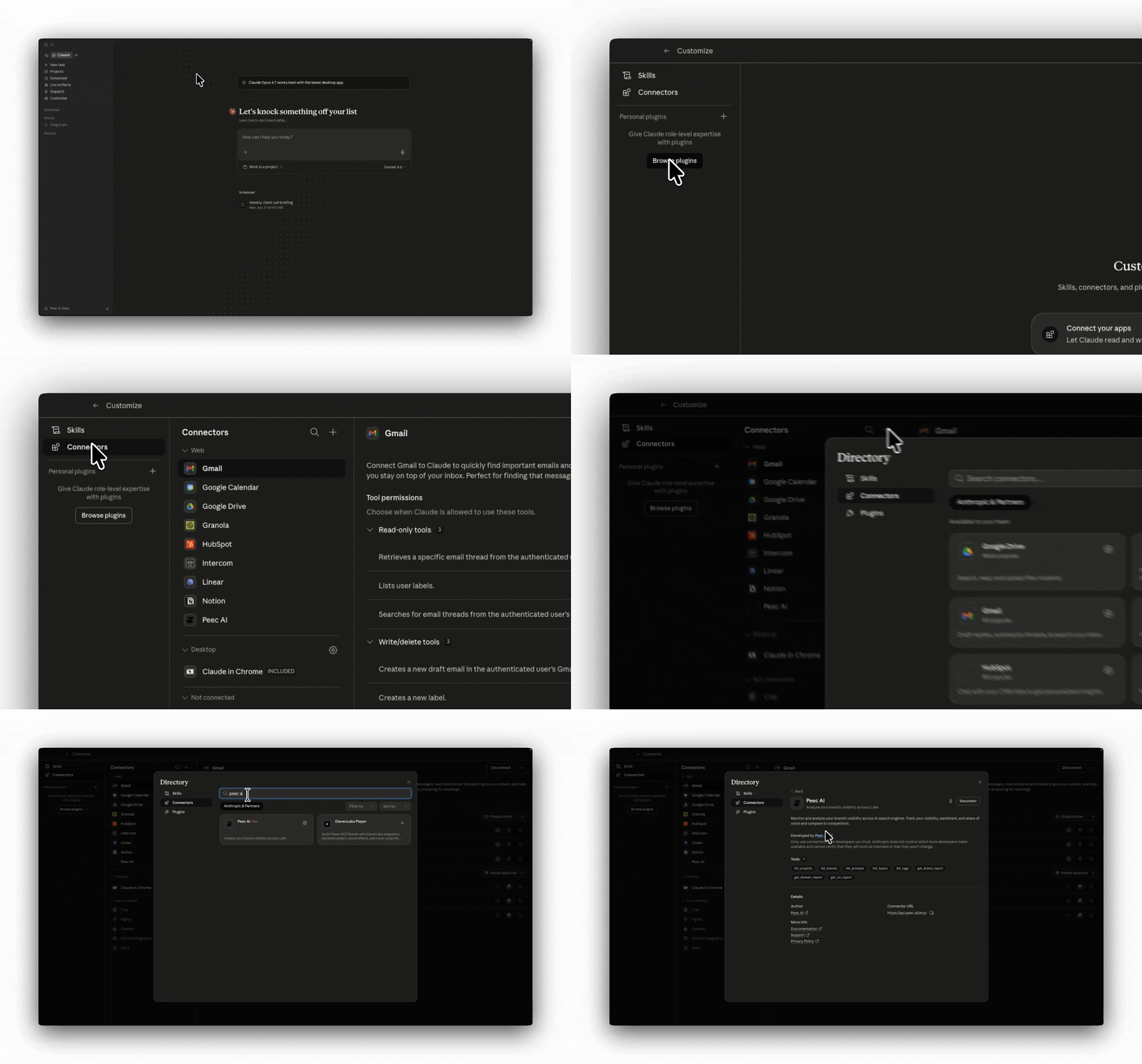
The public AI Heroes AI Search Blog Optimiser for Claude Code already shows the right shape for a GEO workflow: crawl, analyse, recommend, patch, and verify. Peec AI MCP strengthens the middle of that loop with first-party AI visibility and source evidence.
Agent design
| Stage | Agent job | Peec input |
|---|---|---|
| Project selection | Confirm the correct Peec project and brand | list projects, brands, topics, tags |
| Prompt gap read | Find weak prompt classes | brand report, prompt/topic filters |
| Source analysis | Identify cited domains and URLs | domain report, URL report, URL content |
| Recommendation | Decide article anatomy changes | Peec Actions and source gaps |
| Draft patch | Update content, metadata, schema, and tests | evidence summary, not raw IDs |
| Harness | Verify desktop/mobile, schema, sitemap, llms, images | acceptance criteria |
Why this is an agent, not a prompt
A prompt can suggest edits. An agent can run the loop repeatedly: read current data, compare with prior output, open the repo, patch the content, run tests, deploy a preview, and produce a concise evidence report. The value comes from durable workflow boundaries, not a clever one-off answer.
Public-safe implementation rules
Do not expose raw Peec project IDs, run IDs, internal file paths, private customer data, or screenshots containing tokens. Do not say "Peec proves this will rank." Say "Peec shows this prompt/source gap, so this article change is the next measurable test."
Example action
If Peec shows that AI engines cite competitor pages for "how to optimise blog for AI search" but ignore your article, the agent should propose:
- a short answer at the top;
- a table mapping prompt classes to article sections;
- first-party source citations;
- FAQPage JSON-LD;
- internal links to the audit, pricing, and related Claude Code content;
- a follow-up measurement date.
That is how Schmitdy would turn the optimiser into a managed AI search growth system rather than a loose content checklist.
Source and fact ledger
- AI Heroes AI Search Blog Optimiser:
https://www.ai-heroes.co/en-gb/free-tools/ai-search-blog-optimiser/claude-code - Peec AI MCP tools reference:
https://docs.peec.ai/mcp/tools - Peec AI MCP launch article:
https://peec.ai/blog/peec-ai-mcp
Frequently Asked Questions

Founder, Schmitdy
Marco builds AI search growth systems that turn prompts, sources, content, and agents into pipeline for B2B teams.
Related Articles

Peec AI MCP Deep Dive: How AI Search Data Becomes Agentic GEO Execution
Peec AI MCP turns AI visibility data into an agent-readable data layer. The winning workflow is not dashboard replacement; it is measured, source-led execution.

How to Build a Claude Plugin with Peec AI MCP
A plugin gives Claude repeatable instructions. Peec AI MCP gives it live AI-search data. The boundary between them is what makes the system safe.

How to Optimise Your Blog with Claude Code and Peec AI MCP
A practical GEO workflow for turning Peec AI prompt/source evidence into Claude Code blog improvements.
See where AI search is already choosing your competitors
Request the free AI Search audit and get the prompts, source gaps, and next actions that matter for pipeline.
