



At a glance: Dishoom, Gymkhana and Kricket were the most frequently named restaurants among 22 tracked concepts in 1,489 Indian-dining answers. The order changes with the meal and location being asked about. This measures appearances in AI answers, not food quality or bookings.
Updated 3 October 2026. Research and analysis by Marco Lobo, Schmitdy.
A dinner in Soho, a dosa in Hammersmith and a special-occasion booking in Mayfair are three different decisions. This London study tests which Indian restaurant names appear when people ask AI for those decisions, then checks whether the recommendations point to a real, current place to eat.
What did we measure?
We tested 200 questions written in ordinary dining language across ChatGPT, Gemini and Google AI Overviews. None asked for a particular restaurant brand. The main comparison uses 191 questions that explicitly fit Indian dining; nine broader London dining questions are analysed separately.
The study contains 1,489 usable answers in the main comparison. Each percentage below is the share of those answers that named the restaurant. An answer can name several restaurants. This is a comparison of 22 tracked concepts, not a census of every Indian restaurant in London, a taste test or a popularity poll.
| Rank in the 22-concept set | Restaurant | Answers naming it | Naming rate |
|---|---|---|---|
| 1 | Dishoom (comparison benchmark) | 652 / 1,489 | 43.8% |
| 2 | Gymkhana | 321 / 1,489 | 21.6% |
| 3 | Kricket | 289 / 1,489 | 19.4% |
| 4 | Trishna | 244 / 1,489 | 16.4% |
| 5 | Brigadiers | 161 / 1,489 | 10.8% |
| 6 | Gunpowder | 133 / 1,489 | 8.9% |
| 7 | Veeraswamy | 126 / 1,489 | 8.5% |
| 8 | Masala Zone | 124 / 1,489 | 8.3% |
| 9 | Amaya | 93 / 1,489 | 6.2% |
| 10 | BiBi | 90 / 1,489 | 6.0% |
| 11 | Sagar | 79 / 1,489 | 5.3% |
| 12 | Hoppers | 61 / 1,489 | 4.1% |
| 13 | Chutney Mary | 58 / 1,489 | 3.9% |
| 14 | Cinnamon Bazaar | 57 / 1,489 | 3.8% |
| 15 | Ambassadors Clubhouse | 51 / 1,489 | 3.4% |
The guide shows the 15 most frequently named concepts in the tracked set. Lower-count concepts remain in the research archive and private analysis; their omission here is not a judgement of their food.
The measured names cover different offers. Some are neighbourhood restaurant groups; others are individual concepts within larger London groups. Dishoom is included as a comparison benchmark. Hoppers serves Sri Lankan and South Indian food, so its place in this set does not turn it into a generic North Indian restaurant.
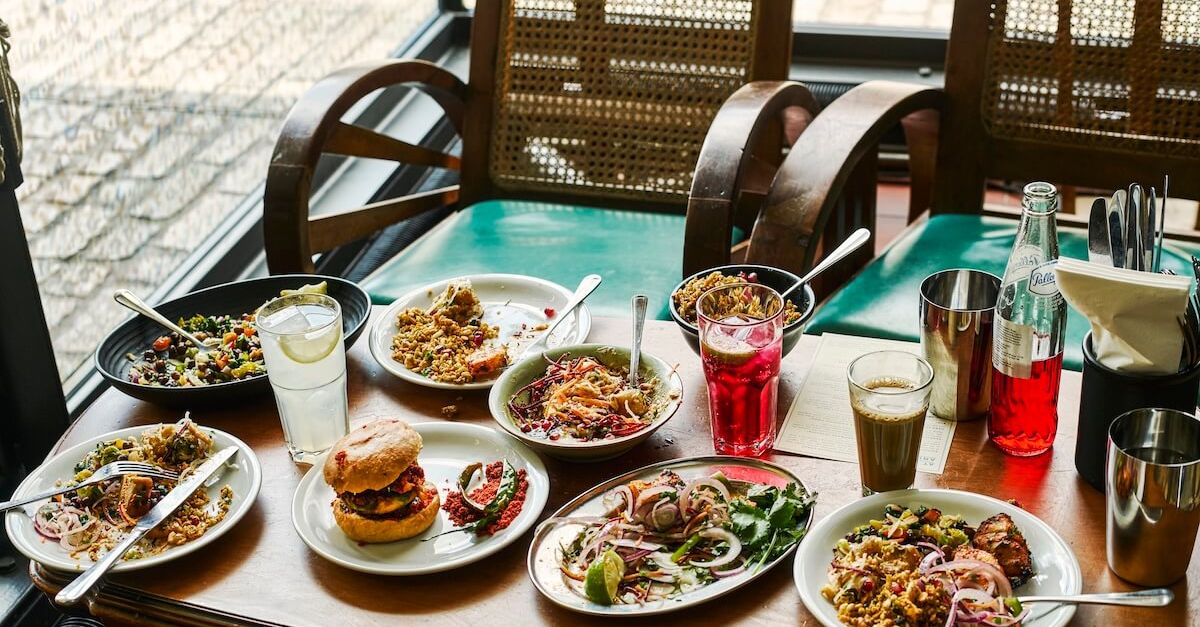
Photo: Dishoom, from the operator’s official website.
How does citywide naming differ from a dining decision?
Kricket appeared in 79 of 260 answers (30.4%) for general Indian restaurant choices, compared with 28 of 278 answers (10.1%) for named neighbourhoods. These are different question groups, not a controlled experiment. The contrast is a reason to inspect the location questions, not proof that a missing page caused it.
Someone asking for an Indian restaurant in London has left many choices open. They may want a quick lunch, a long dinner, a vegetarian menu or a place near their hotel. An answer containing a familiar name does not establish whether the suggested branch serves the meal they want at the time they need it.
Our question groups make those differences inspectable. We tested neighbourhood searches, dietary and food-style choices, value and casual meals, visitor questions and dining occasions. We show a subgroup percentage only when that subgroup has at least 30 usable answers. The question set is designed research; it is not a claim that we measured search volumes.
| Specific question group | Kricket | Sagar |
|---|---|---|
| General Indian restaurant choices | 79 of 260 answers (30.4%) | 0 of 260 answers (0.0%) |
| Named neighbourhoods | 28 of 278 answers (10.1%) | 10 of 278 answers (3.6%) |
| Dietary needs and food styles | 40 of 216 answers (18.5%) | 49 of 216 answers (22.7%) |
| Casual meals and value | 52 of 250 answers (20.8%) | 6 of 250 answers (2.4%) |
| Visitors and landmarks | 15 of 105 answers (14.3%) | 2 of 105 answers (1.9%) |
| Groups and occasions | 28 of 212 answers (13.2%) | 3 of 212 answers (1.4%) |
What does Kricket’s result reveal about lunch and neighbourhood discovery?
Kricket’s current site lists Brixton, Canary Wharf, Shoreditch and Soho. It also advertises a £20 lunch thali, available daily across the London restaurants, built around Chicken Mappas or Grilled Squash Makhani. Those are useful, specific facts for somebody choosing lunch.
In the neighbourhood group, Kricket was named in 28 of 278 answers (10.1%). Its broader Indian-restaurant result was stronger: 79 of 260 answers (30.4%). The useful question is which of the local searches fit Brixton, Canary Wharf, Shoreditch or Soho, and whether the answer identifies the right site.
The practical next step is to compare the questions in that weaker area with the relevant branch page and menu. A reader should be able to establish which restaurant offers the lunch, when it is served and where to book without working backwards from a citywide brand story. If those facts already exist, the job is to make them consistent across the pages and listings that the answers actually use, not to commission a duplicate page.
Private dining is a separate decision. Kricket already advertises groups and events. That makes a venue-specific group-dining page worth checking for that business; it does not mean every Indian restaurant needs to pursue private events.
Why do food style and branch both matter for Sagar?
Sagar identifies five locations: Covent Garden, Leicester Square, the West End, Hammersmith and Harrow. Its offer is South Indian vegetarian cooking, with vegan choices and roots in Udupi cuisine. A person asking for a dosa in Hammersmith is making a much narrower request than someone asking for a central London celebration dinner.
Sagar appeared in 49 of 216 answers (22.7%) on dietary and food-style questions, but 6 of 250 answers (2.4%) on casual-meal and value questions. That difference suggests checking whether relevant lunch and everyday-meal searches describe Sagar as clearly as the vegetarian and South Indian searches do.
For that narrower search, a named branch, a readable current menu and a straightforward booking or walk-in route are more useful than a long introduction about Indian food. The same applies to dietary information: a vegetarian restaurant and an individual vegan dish are different facts. Neither establishes an allergy guarantee.
The branch evidence also prevents a basic research error. Sagar currently lists 37 Panton Street for Leicester Square. An older restaurant listing at that address is not sufficient evidence that the previous operator still trades there. We checked current operator pages before building the guide.
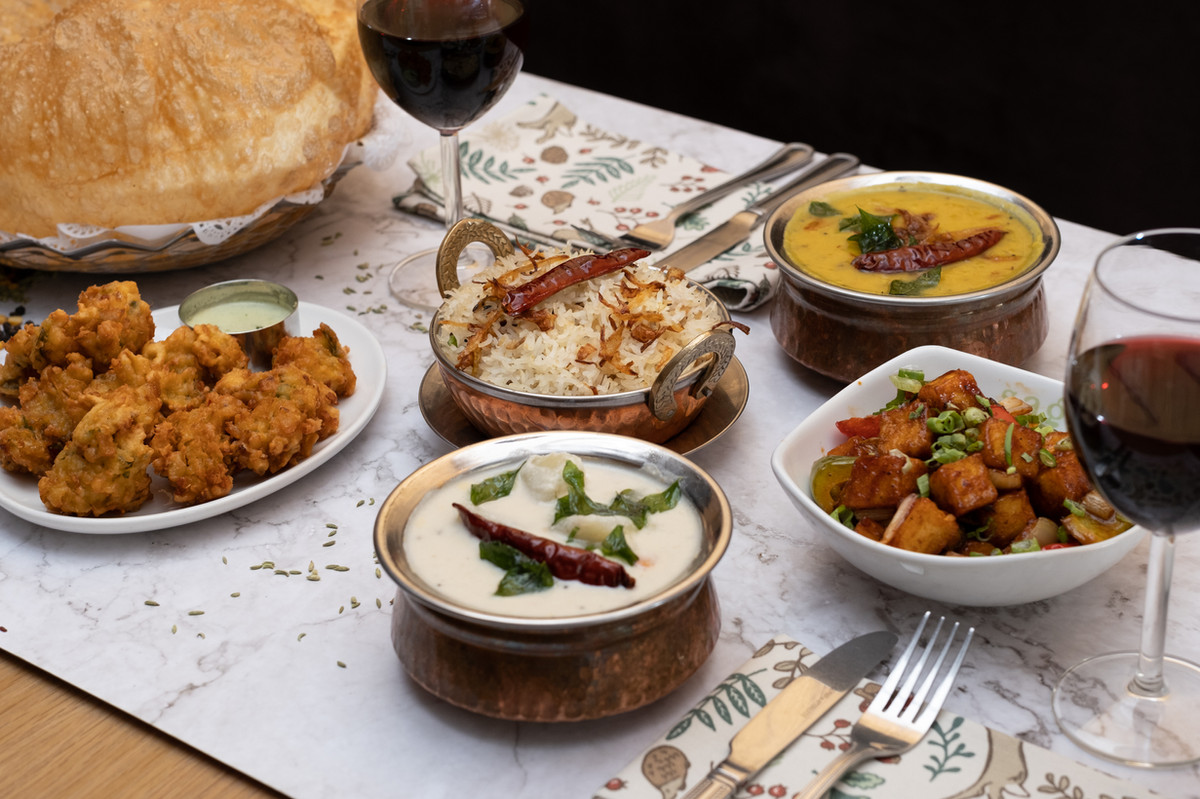
Photo: Sagar, from the operator’s official website.
Why do Mayfair dining recommendations need precise names?
Tamarind of Mayfair lists 20 Queen Street, with lunch, à la carte and tasting menus. Tamarind Kitchen is a separate concept in Soho. They should not be merged because an answer uses the shorter word “Tamarind”. Nor should the ingredient in a dish be counted as a restaurant recommendation.
Checking the answer text found 16 references to Tamarind of Mayfair and six to Tamarind Kitchen. Mayfair's count includes one historical reference to a chef's career, not a recommendation to book there. Ingredient mentions are excluded. Both restaurants sit below the top 15 shown here; the corrected analysis and research receipt retain their results.
This is a measurement issue before it becomes a marketing recommendation. We checked the answer text when a short restaurant name could refer to more than one thing. The reproducibility note records the matching decisions and the retained original outputs.
The reader’s version is simpler: the recommendation should identify the right restaurant and the right neighbourhood. Tamarind’s own Mayfair page distinguishes its terrace, dining area across two floors and group booking route. Those details help someone decide whether a particular visit fits; they do not prove that a page is responsible for a higher AI ranking.
Which six dinners sit behind the restaurant names?
The ranking becomes more useful when the name turns into an actual evening out. These are current operator descriptions, not claims that we tasted or reviewed the food.
Trishna, Marylebone
Trishna sits on Blandford Street and focuses on Indian coastal cooking. Its wine list and neighbourhood dining room make it a different proposition from a quick curry stop. Start with its current menu and reservation page if seafood and a sit-down dinner are what you have in mind.
Brigadiers, Bloomberg Arcade
Brigadiers combines Indian barbecue with beer, whisky and live sport. Its private rooms have their own capacities and facilities, so a match-day gathering is a real advertised use of the venue. That specificity is more useful than labelling every restaurant in the category suitable for groups.
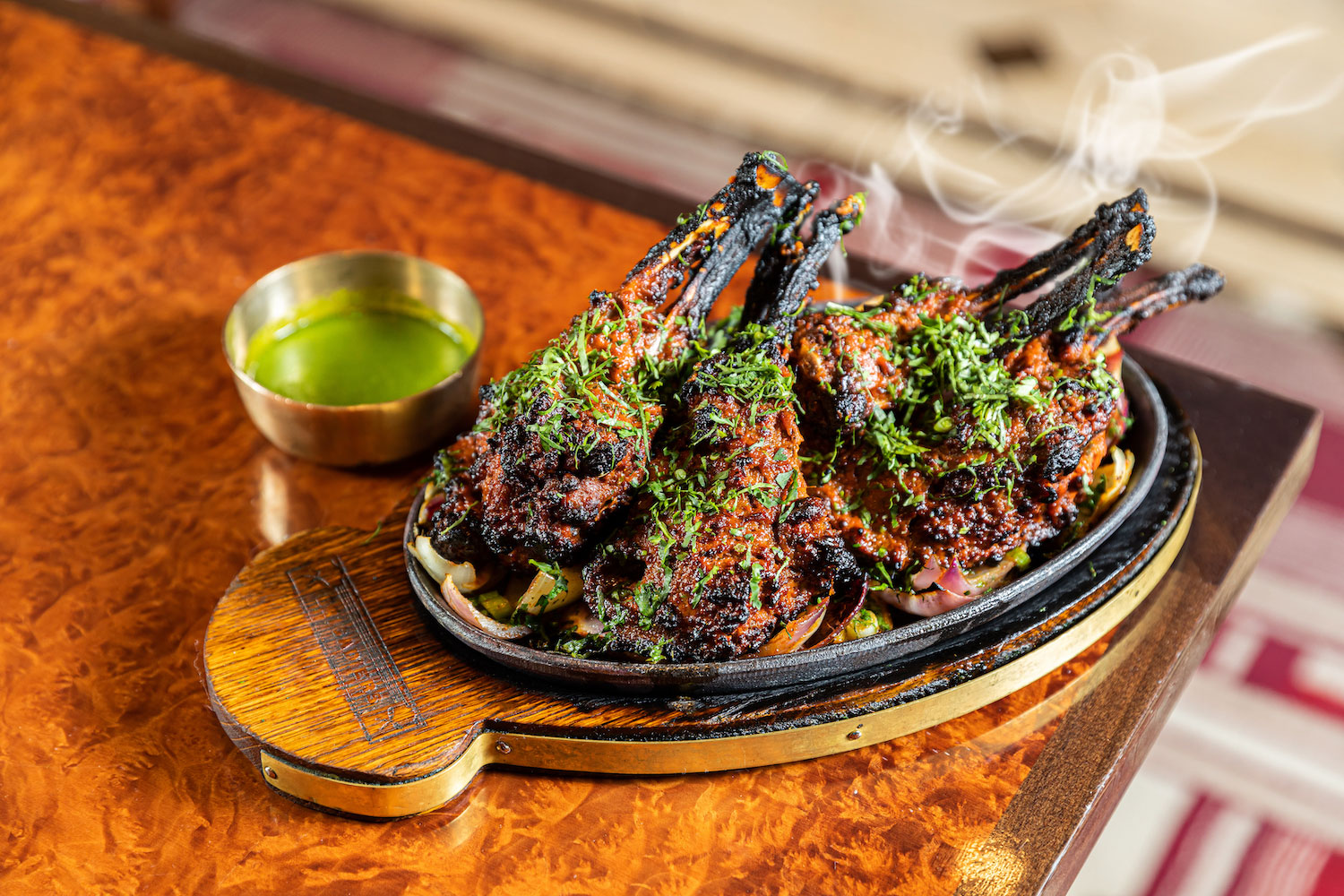
Photo: Brigadiers, from the operator’s official website.
Gunpowder, Soho and Spitalfields
Gunpowder publishes separate location menus and recommends sharing plates. Its venison-and-vermicelli doughnut and Chettinad pulled-duck oothappam give a diner a more concrete idea of the cooking than the broad description “modern Indian”. Check the menu for the restaurant you are booking rather than assuming every dish is served at both.
Veeraswamy, Regent Street
Veeraswamy lists its restaurant on the mezzanine of Victory House, 99 Regent Street. Its slow-cooked dishes, lunch and weekend-brunch routes suit a different visit from a neighbourhood snack stop. The website also publishes dress and children’s policies; those practical constraints matter before a family books.
Amaya, Belgravia
Amaya puts its open kitchen and three grilling methods at the centre of the offer: tandoor, tawa and charcoal sigri. It publishes a private dining room for up to 14 alongside its main dining room. A booking for that room needs more precise information than a generic “Indian restaurant for a celebration” recommendation.
Hoppers, four London neighbourhoods
Hoppers describes food inspired by Sri Lanka and South India, including hoppers, dosas, rice dishes and kothu. Its current site separates Soho, Marylebone, King’s Cross and Shoreditch. Check the relevant location and menu; a broad Indian-dining comparison captures only part of this restaurant’s identity.
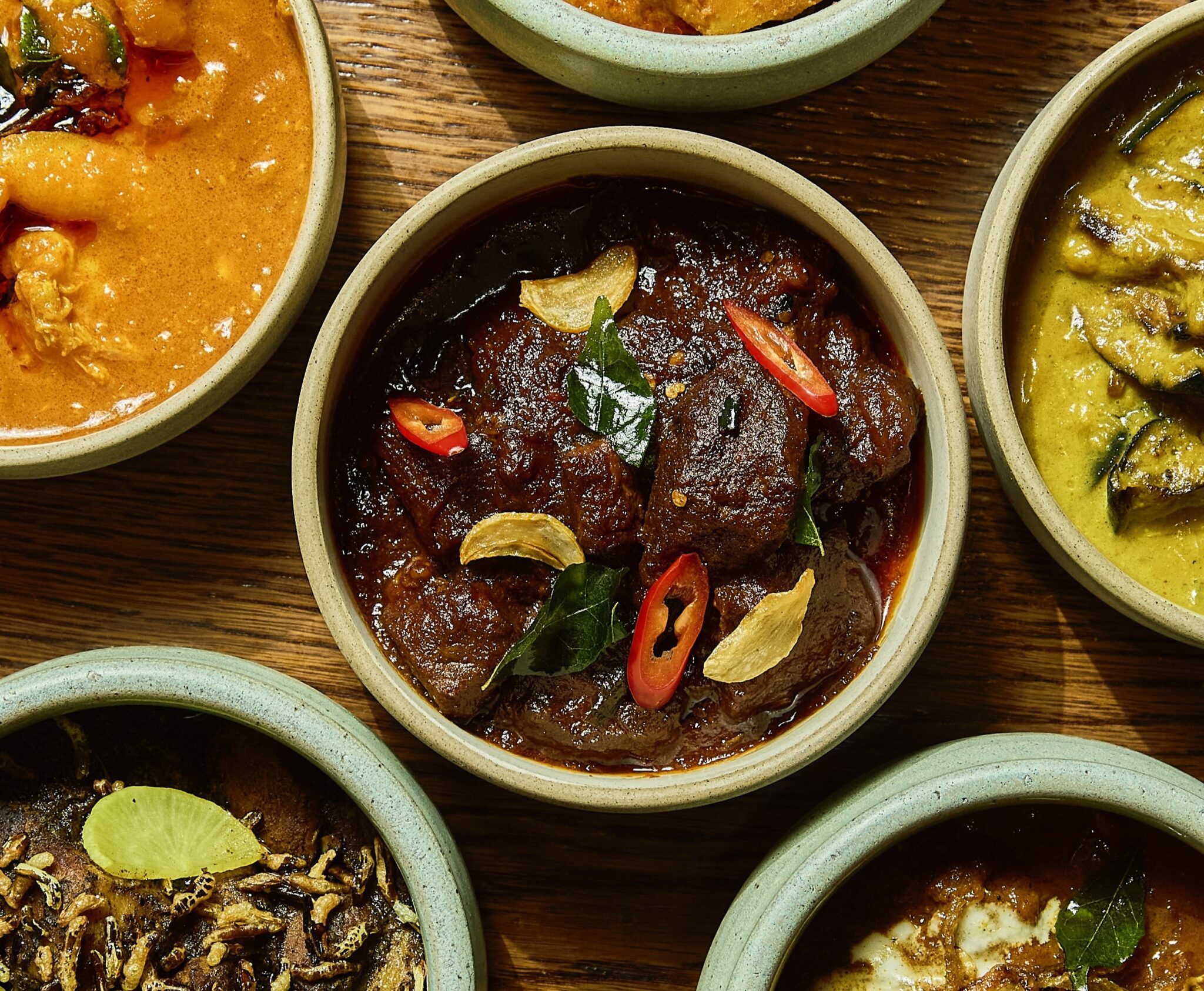
Photo: Hoppers, from the operator’s official website.
What sources did the systems use?
| Source domain | Answers retrieving it | Share of the same answers |
|---|---|---|
| opentable.co.uk | 269 | 18.1% |
| michelin.com | 229 | 15.4% |
| theinfatuation.com | 225 | 15.1% |
| timeout.com | 224 | 15.0% |
| instagram.com | 94 | 6.3% |
| dishoom.com | 82 | 5.5% |
The table counts answers that retrieved a page from each domain, not traffic to the publication or restaurant. Retrieval and recommendation are separate: a system can open a restaurant page without naming that restaurant in the answer, and it can name a restaurant while citing a guide instead.
The Infatuation’s Indian-restaurant guide appeared among sources in 178 of the same answers. Its live guide is therefore a specific page to check, rather than treating “PR” as an undirected activity.
For an operator, the actionable question is which page is doing which job. A dining guide may provide a shortlist. An official location page can settle the address, menu, service times and booking route. A destination listing may help somebody place the restaurant near a theatre, station or visitor attraction. These pages need to agree on the basics even when their editorial purpose differs.
We do not infer that a restaurant is absent from a publisher’s website merely because it is absent from one measured answer. Any outreach recommendation to a guide or publication must check the specific live page first.
What should a restaurant work on first?
Start with a dining decision the restaurant can genuinely serve and a measured gap large enough to investigate. The least flattering number is not automatically the best opportunity. A tasting-menu restaurant does not need to win every quick-lunch question, and a small vegetarian café does not need a private-events campaign.
- Check the actual branch. Use one current address, menu route and booking link across the operator site and relevant listings. Do not turn an old branch or a closed dining room into a growth opportunity.
- Make the specific meal easy to understand. A lunch thali, dosa, sharing-plate dinner and tasting menu answer different needs. State what is available, where and when.
- Check the sources already appearing. Review the actual retrieved guide or destination page before proposing editorial outreach. A missing restaurant in a relevant current list is different from an outdated address in an existing entry.
- Rerun the same questions. Compare the same restaurant names, eligible questions and engines. Count changes in named answers separately from changes in retrieved sources, bookings and revenue.
For Kricket, the starting comparison is its broad Indian-dining strength against its weaker neighbourhood naming rate. For Sagar, it is the difference between dietary/style discovery and everyday casual-meal discovery. Both require checking the questions against the actual menu and branch before choosing what to change.
This approach also gives a category leader useful work to do. A restaurant can appear often in broad Indian-dining answers while being less consistently named for a neighbourhood or a meal it already offers. The right response is to check that particular route to discovery, not rewrite an established restaurant’s identity.
Sources
- Dishoom official website
- Gymkhana official website
- Kricket official website
- Trishna official website
- Brigadiers official website
- Gunpowder official website
- Veeraswamy official website
- Amaya official website
- Sagar official website
- Hoppers official website
- Tamarind of Mayfair official website
- Tamarind Kitchen official website
- The Infatuation’s London Indian restaurants guide
- Frozen research receipt
How was the study measured and what are its limits?
The measurement window was 2 to 3 October 2026. We asked 200 unbranded questions about dining in London across ChatGPT, Gemini and Google AI Overviews. 1,790 response records were collected; 226 empty responses were excluded from usable-answer denominators.
The main Indian-dining comparison uses 191 eligible questions and 1,489 usable answers. Nine wider dining questions remain a separate exploratory set. We do not combine these populations when quoting a restaurant’s category naming rate. Repeated answers across questions and engines are observations in a designed sample, not independent consumers.
A restaurant’s naming rate is the number of eligible usable answers naming it divided by the common eligible usable-answer total. The same denominator applies to every row. The public table is a stated tracked set; it is not a claim to have ranked every London restaurant. It measures AI naming, not food quality, recommendation accuracy, footfall or sales.
Brand matching was checked against the underlying answer text. A documented contextual review separates Tamarind of Mayfair from Tamarind Kitchen and the ingredient tamarind. Ambiguous identities are retained in the internal review rather than silently promoted into a confirmed restaurant count. A named answer can include context or a caution; naming is not automatically endorsement.
We retained the original questions, engine settings, raw answer text, sources and extraction records. The research receipt records the frozen sample and calculation rules. Our AI-search measurement methodology explains the difference between an appearance in an answer, a retrieved page and a commercial outcome.
Current venue details were checked against official operator pages on 3 October 2026. Check menus, service times, availability and dietary requirements directly with the restaurant before booking.


 Squarespace
 Webflow
 Sanity
 Shopify
 HubSpot