



TLDR: Yes, but mainly when the guest asks for something special. In our 60-question test, 29 of 30 special-occasion answers named an award; only 3 of 30 everyday answers did. A star is a credential an assistant can quote, not the engine of most dinner recommendations, and it does not pass to a group's other venues.
Take a hypothetical. You earned a star in the spring. In the summer a guest asks an assistant for a special-occasion dinner nearby, and the answer lists the guide's page, two magazine round-ups and a restaurant two streets away that holds no star at all.
The star did its job: it put the guide's page in front of the assistant. It did not write the answer. So treat the award as one fact in your profile, written once and repeated exactly, rather than as your AI-visibility strategy. Some advisers sell awards as a moat in AI search; on the evidence below, the moat covers celebration questions only.
Which awards and guides count in each market?
Each market has its own short list of guides, and an assistant meets them as web pages: the guide's entry for your restaurant, its city lists and the press coverage of its announcements. Use each guide's own name and labels, because those are the words an assistant can match.
| Guide | Market | What it awards |
|---|---|---|
 MICHELIN Guide Great Britain & Ireland | UK | One, Two or Three MICHELIN Stars; Bib Gourmand |
 The Good Food Guide | UK | Good, Very Good, Exceptional or World Class |
 AA Rosettes | UK | One to five Rosettes |
| MICHELIN Guide, US editions | US, selected regions | One, Two or Three MICHELIN Stars; Bib Gourmand |
 James Beard Awards | US | Semifinalist, nominee or winner |
| Guide MICHELIN Deutschland | Germany | One, Two or Three MICHELIN Stars; Bib Gourmand |
 Gault&Millau | Germany | Scores out of 20; no new German edition in 2026 |
 Der Feinschmecker | Germany | A yearly list of the 500 best restaurants |
| Falstaff Restaurantguide Deutschland | Germany | Ratings in forks (Gabeln) |

United Kingdom
The UK has three guides with their own inspectors. MICHELIN says it awards stars "for the food on the plate" and that the style, comfort and formality of a restaurant play no part; the Bib Gourmand is its award for great value. Its 2026 Great Britain and Ireland selection was announced on 9 February 2026 in Dublin.
The Good Food Guide has rated entries Good, Very Good, Exceptional or World Class since April 2022, when it dropped its old score out of 10. Its inspections are anonymous, it pays for every meal, and no restaurant can pay to be included. The AA awards one to five Rosettes after anonymous visits, for the cooking alone, and says only around 5% of UK and Irish restaurants hold at least one.
United States
MICHELIN covers selected US regions, not the whole country. Its new Great Lakes edition, for example, covers Cleveland, Detroit, Indianapolis, Milwaukee, Minneapolis and Pittsburgh and reveals its first selection in 2027. Across the whole country, the national credential is the James Beard Awards, which name semifinalists, then nominees, then winners.
Germany
In Germany the Guide MICHELIN announced its 2026 stars on 23 June 2026 in Frankfurt. Gault&Millau published no German edition in 2026 after its licensee ended the arrangement in May 2025, according to American Express's dining magazine (as at July 2026), though its international site still lists German restaurants with scores out of 20. Der Feinschmecker published its list of the 500 best restaurants in Germany on 12 February 2026, and Falstaff publishes a 2026 German restaurant guide that rates venues in forks.
What does a test of prestige and ordinary questions show?
Guide pages showed up when the question asked for something special, and mostly vanished when it asked for something ordinary. We cannot see how any assistant weighs its sources, so we tested what we could observe.
On 1 November 2026 we put 60 diner questions to one assistant, Claude with web search switched on. For each market we wrote ten prestige questions (an anniversary, a tasting menu, a client dinner, a proposal) and ten ordinary ones (a Sunday roast, cheap tacos, a kids' menu, a dog-friendly pub, somewhere open late on a Monday). The German set was asked in German. Each answer was asked to list its web sources, and we counted two things: whether a guide's own page was listed, and whether the answer itself named an award.
| Market and measure | Prestige questions | Ordinary questions |
|---|---|---|
| UK: guide page listed | 10 of 10 | 1 of 10 |
| UK: award named in the answer | 10 of 10 | 2 of 10 |
| US: guide page listed | 8 of 10 | 2 of 10 |
| US: award named in the answer | 9 of 10 | 1 of 10 |
| Germany: guide page listed | 10 of 10 | 5 of 10 |
| Germany: award named in the answer | 10 of 10 | 0 of 10 |
In the UK, every prestige answer listed a MICHELIN page and named an award. Everyday answers leaned on Time Out, OpenTable, DesignMyNight, local blogs and review platforms instead. Only one listed a guide page: The Good Food Guide, for a brunch dish.
In the US, eight of ten prestige answers listed a MICHELIN page, and nine named an award. The Infatuation and OpenTable each appeared in eight of those answers too, as often as MICHELIN, and Resy's editorial pages in five. One PR firm's index says Eater has overtaken MICHELIN as the source AI engines lean on for US fine dining, though it calls its own figures "modeled, not measured". Eater appeared in none of our 20 US answers.
In Germany, every prestige answer listed a Guide MICHELIN page and named an award; one also listed Der Feinschmecker and one Falstaff. Half the everyday answers listed a guide's site too, but four of those five were Falstaff's everyday lists (breakfast, pizza, dog-friendly places, vegan street food), and none of the ten everyday answers named an award.
Guide pages were never the whole answer. A prestige answer listed about ten different websites on average, and guide sites made up roughly one in eight of them. That is the hypothetical from the top of this piece: the guide page sat in the sources beside round-ups, booking platforms and a venue with no star.
This test has limits. It covers one assistant, one day and one run per question, and answers change between runs and between assistants. A listed source shows what the assistant retrieved, not what it relied on. Treat the pattern as a reason to check your own questions, not as a law.
What carries the answer when no star is in play?
Everyday questions turn on facts a guide does not hold: whether you are open, what you serve, what it costs and what guests say. Those come from your own pages, your Google Business Profile, booking platforms and reviews.
Google says local results rest mainly on relevance, distance and how well known a business is, and that links to your business and the number of reviews feed that last measure. Our guides on star rating and AI visibility and on whether Google reviews affect AI restaurant recommendations cover that ground.
An award crossed into an everyday answer only when the awarded venue also fitted the question. One answer to a curry question in Birmingham named a restaurant it described as two-star, with a warning that it serves a tasting menu only. One answer about cheap tacos in Austin described a taco truck as MICHELIN-recognised. The award was mentioned because the place already answered the question.
How should you write and place the award line?
Write one line that matches the guide's own entry, with the year, and put it in the five places that carry it. An assistant can only quote a credential it can find, and it trusts it more when every page says the same thing.
- Copy the guide's wording. Use the distinction exactly as the guide writes it, the edition and a link: for example One MICHELIN Star, MICHELIN Guide Great Britain & Ireland 2026 or Very Good, The Good Food Guide 2026. Check it against your entry on the guide's site.
- Put it on your own site. Add it to the venue page and the about page, linked to your guide entry. Repeat the same text in the schema.org
awardproperty on your Restaurant markup; Google asks that structured data match the visible page. - Put it in your Google Business Profile description. Use plain text, because the description allows no links, and never add it to the business name, where Google bans marketing taglines.
- Put it on your booking and listing profiles. Use the same words on each reservation platform and listing you control.
- Put it in your press kit and on your menu. Date it, and change all five places in the same week when the next edition lands.
In your own marketing, let the words carry the claim. Few guides publish rules on how restaurants may use their marks: The Good Food Guide supplies stickers only for the current year and sends other logo questions to its editors, and the James Beard Foundation can bar a semifinalist, nominee or winner from using its seal or logo. We found no public policy for restaurants on MICHELIN's site, so check with the guide before you put its mark beside your own name. The logos in our table above only identify each guide.
Dates matter in Germany in particular. A line that reads Gault&Millau 2025 is accurate; one that implies a 2026 Gault&Millau rating is not, because no German edition appeared this year.
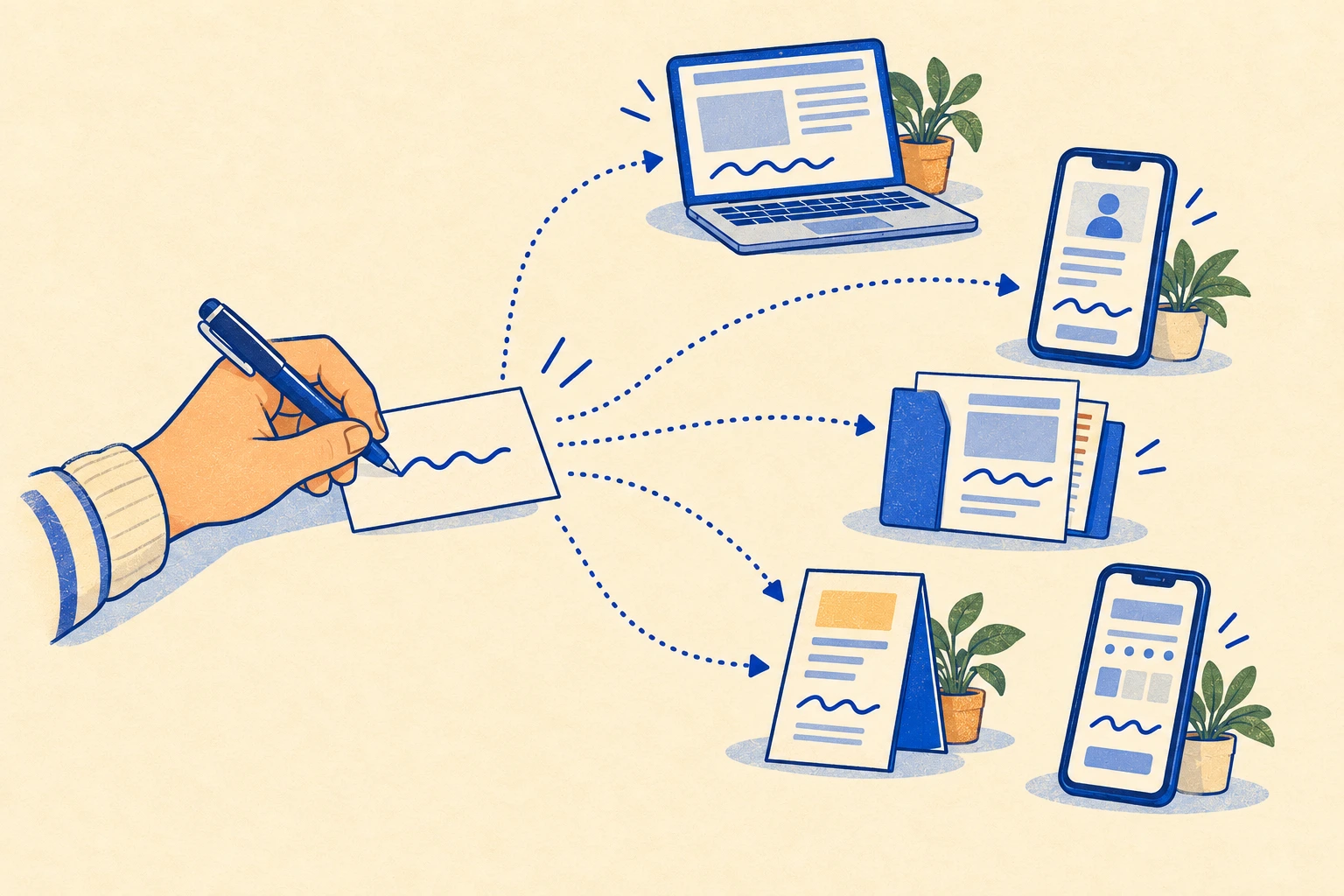
This is where we help an awarded venue. Tracking comes first: our free audit records the answers assistants give to your guests' questions, shows which guide, press and listing pages are listed alongside them, and separates each venue in a group. Then we do the work that moves the everyday answers: Google Business Profile optimisation, Google Search Console and GA4 set-up, a blog built for you, and menu pages assistants can read. It is all included in the fee at no extra charge, with a person checking every change.
When does the guide dominate, and what does not transfer?
At the top end, the guide is the answer. Questions about a once-in-a-lifetime dinner or the best tasting menu in a city drew guide pages in every market we tested, and the answers opened with starred restaurants. If you hold two or three stars, the award is your main lever, and the job is keeping your guide entry, website and profile identical.
The award also stays where it was given. The AA says Rosettes go to the restaurant and its kitchen team, not just one chef. A group's sister venues inherit none of it. An assistant asked about your bistro two streets from the flagship needs the bistro's own menu, hours and reviews. Our guide on whether AI sees a restaurant group as one brand explains how to keep venues apart, and our UK restaurant AI visibility index shows which names assistants pick across the country.
For turning reviews and press into guest information, read our fine-dining AI search guide.
What should you do this week?
Write the award line once. Check it against your guide entry, put it in the five places above and set a reminder for the next edition date. Then spend the rest of the effort on the everyday questions, where the star does little and your menu, hours and reviews do most of the work.
If you want to see which guide and press pages assistants list for your venue before you change anything, get our free AI search audit for awarded restaurants.
Sources
All pages were checked on 1 November 2026.
- MICHELIN Guide: What is a MICHELIN Star?, 12 November 2025.
- MICHELIN Guide: Dublin to host the Great Britain & Ireland 2026 ceremony, 22 October 2025.
- The Good Food Guide: restaurant FAQs.
- The Good Food Guide: the new scoring system, 27 April 2022.
- AA RatedTrips: AA Rosettes explained.
- MICHELIN Guide: American Great Lakes edition.
- James Beard Foundation: the Awards.
- Tageskarte: Guide MICHELIN Deutschland on 23 June 2026 in Frankfurt, 12 February 2026.
- American Express Germany: Gault&Millau, 28 July 2026.
- Gault&Millau: restaurants in Germany.
- Der Feinschmecker: the 500 best restaurants in Germany 2026, 12 February 2026.
- Falstaff: Restaurant Guide Germany 2026.
- Everything PR: Restaurants Citation Share Index 2026, a PR firm's modelled index, updated 26 October 2026.
- Google Business Profile Help: how local results are ranked.
- Google Business Profile Help: guidelines for representing your business.
- Google Search Central: AI features and your website, updated 10 December 2025.
- Schema.org: the award property.


 Squarespace

 Webflow
 Sanity
 Shopify
 HubSpot