



TLDR: No. Guests add an assistant on top of platforms, not replacing them. ChatGPT shows Yelp reviews and photos and books tables through OpenTable, Resy and Yelp, so your profiles feed the answer. Own the two or three platforms that matter in each market, give each a named owner and a 20-minute monthly check, and drop the rest.
Here is a scene to picture. A couple walks up to your front desk on a Friday night and says ChatGPT sent them. On the phone in their hand, under the answer, sits a photo from your Yelp page and a star rating nobody on your team has looked at in two years. They did not use ChatGPT instead of Yelp. They got Yelp through ChatGPT.
So the useful question for a restaurant group is no longer which platform guests use. It is which of your profiles the assistant is showing, and whether anyone owns them. Two kinds of advice are doing the rounds: listings are dead now that guests ask an AI, or claim every platform you can find. Both waste time. Own the two or three platforms that feed answers in each of your markets, give each one a named owner and a short monthly check, and let the rest go.
Are guests really switching from Yelp to ChatGPT?
Some guests now ask an assistant first, but nothing published shows them leaving review platforms in large numbers. The figures point to an extra step on top of the old ones, not a swap. The restaurant figures below are US figures, because that is where the published surveys are; the UK and German picture follows in the next sections.
Assistant use is real and growing. In a Pew Research Center survey of US adults run 17 to 23 February 2026, 44% said they ever use ChatGPT, up from 18% in 2023; Pew notes that the 2026 question also asked about other chatbots. For restaurants specifically, a March 2026 survey of 3,001 US consumers, run by Dynata for the delivery company DoorDash, found that 22% have used an AI tool such as ChatGPT or Gemini to help choose a restaurant.
Review sites have not gone away in the same data. A Nielsen survey of 763 US consumers in August 2025, run for the reputation software company Reputation, found 20% use AI tools to research restaurants and bars, against 24% for review sites like Yelp and 26% for social channels. Guests are using several sources at once.
What about Yelp's own traffic? Yelp's annual report for 2025, filed 27 February 2026, expects traffic to "remain challenged" in 2026 and puts that mainly down to economic uncertainty and inflation. It also says Google's AI answers have "reduced the prominence of links to our platform and may be having a negative impact on our traffic." It gives no figure that separates assistant use from other causes, and we found no independent series that measures Yelp traffic falling because of assistants. For the wider picture, see our restaurant AI visibility statistics.
What does ChatGPT take from Yelp, OpenTable and Resy?
Because guests are asking an assistant that draws on the platforms, the next question is which data it takes from which one. In 2026 the answer became concrete: reviews and photos from Yelp, and live booking times from three reservation platforms.
On 23 July 2026, Axios reported that Yelp is licensing reviews, photos and other business information to OpenAI, and that ChatGPT will surface Yelp reviews, ratings, photos and business details in its answers, with Yelp branding and links. OpenAI controls how that looks, and the deal does not stop Yelp from making similar deals with other AI companies.
On 10 August 2026, OpenAI added restaurant reservations to ChatGPT. A guest gives a place, time, party size and preferences, sees available times in the answer and picks one to book. Coverage differs by partner:
- OpenTable: reservations are available globally.
- Resy: US only; Resy's announcement describes booking US Resy restaurants inside ChatGPT.
- Yelp: US and Canada, for thousands of restaurants that use Yelp Guest Manager, including its waitlist.
That changes what a stale profile costs. The photo, rating, hours and open tables a guest sees in the answer can come straight from profiles you already pay for or once claimed. A Yelp link listed alongside an answer does not prove ChatGPT ranked you because of it; OpenAI has not published how it orders restaurants. But the guest still sees that photo and that rating before they see your website. If the booking step then lands on the wrong venue, read our guide on how to book the right location from an AI recommendation.
Google's own guidance is about its local results: it says they are based mainly on relevance, distance and prominence, and asks businesses to keep profile details complete and accurate, including hours, and to add photos. How reviews play into AI answers is covered in our piece on whether Google reviews affect AI restaurant recommendations.
Which platforms matter in the US, UK and Germany?
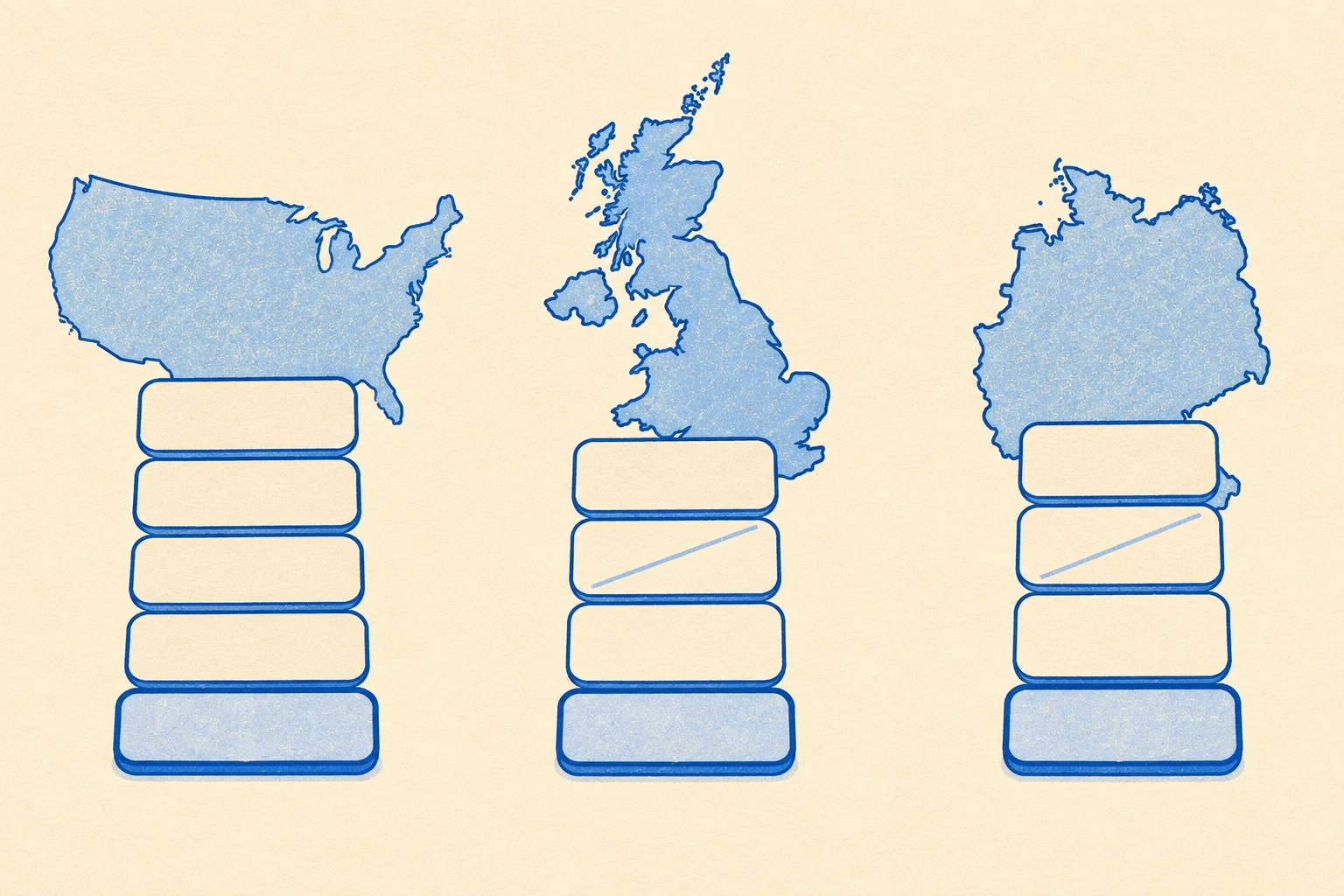
Because each partner covers different countries, the platforms worth owning change by market. Google Business Profile is the base everywhere. After that, the US list is longer than the UK or German one.
United States
In the US, own Google, Yelp and whichever booking platform you already use. Yelp now feeds ChatGPT with reviews and photos and can take bookings there, so a US venue with a neglected Yelp page has a visible problem.
| Platform | What it feeds | Our rule |
|---|---|---|
 Google Business Profile | Google Maps and local results | Own it for every venue |
 Yelp | Reviews, photos and details in ChatGPT; Guest Manager bookings | Own it and check monthly |
| OpenTable | Bookable times in ChatGPT | Own it if you book through it |
 Resy | Bookable times in ChatGPT for US Resy venues | Own it if you book through it |
 Tripadvisor | Not a ChatGPT reservation partner in OpenAI's August 2026 note | Keep where venues have recent reviews |
United Kingdom
In the UK, own Google and OpenTable if you take bookings through it; Yelp drops to a claim-and-correct job. Yelp's annual report names the US and Canada as its core markets and describes winding down its international sales and marketing. Its ChatGPT bookings stop at the US and Canada, and Resy's ChatGPT bookings are US only, which leaves OpenTable as the one ChatGPT booking partner that covers UK venues.
| Platform | What it feeds | Our rule |
|---|---|---|
| Google Business Profile | Google Maps and local results | Own it for every venue |
| OpenTable | Bookable times in ChatGPT, worldwide | Own it if you book through it |
| Tripadvisor | Not a ChatGPT reservation partner in OpenAI's August 2026 note | Keep where venues have recent reviews |
| Yelp | Not a Yelp core market; ChatGPT bookings exclude the UK | Claim, correct once, then leave |
One UK clean-up job: the booking platform Quandoo has closed. Remove any old Quandoo buttons or links from your venue pages.
Germany
In Germany, own Google and OpenTable if you book through it, and treat Yelp the same way as in the UK. Assistant use is widespread there too: a Bitkom survey of 1,005 people aged 16 and over, run in spring 2025, found 67% use generative AI at least now and then, and 43% use ChatGPT. That is general use, not restaurant choice; we found no German survey on assistants and restaurant decisions. The German hospitality trade title Tageskarte wrote that the OpenTable link is the part of ChatGPT's booking feature that matters for the German market.
| Platform | What it feeds | Our rule |
|---|---|---|
| Google Business Profile | Google Maps and local results | Own it for every venue |
| OpenTable | Bookable times in ChatGPT, worldwide | Own it if you book through it |
| Tripadvisor | Not a ChatGPT reservation partner in OpenAI's August 2026 note | Keep where venues have recent reviews |
| Yelp | Not a Yelp core market; ChatGPT bookings exclude Germany | Claim, correct once, then leave |
Quandoo, run by a German company, matters most here: its German site now says the platform is no longer available, and German trade reporting put the end of new bookings at 30 September 2026. Delivery apps are a separate decision, covered in our guide to delivery-platform listings.
What should a 20-minute platform check cover?
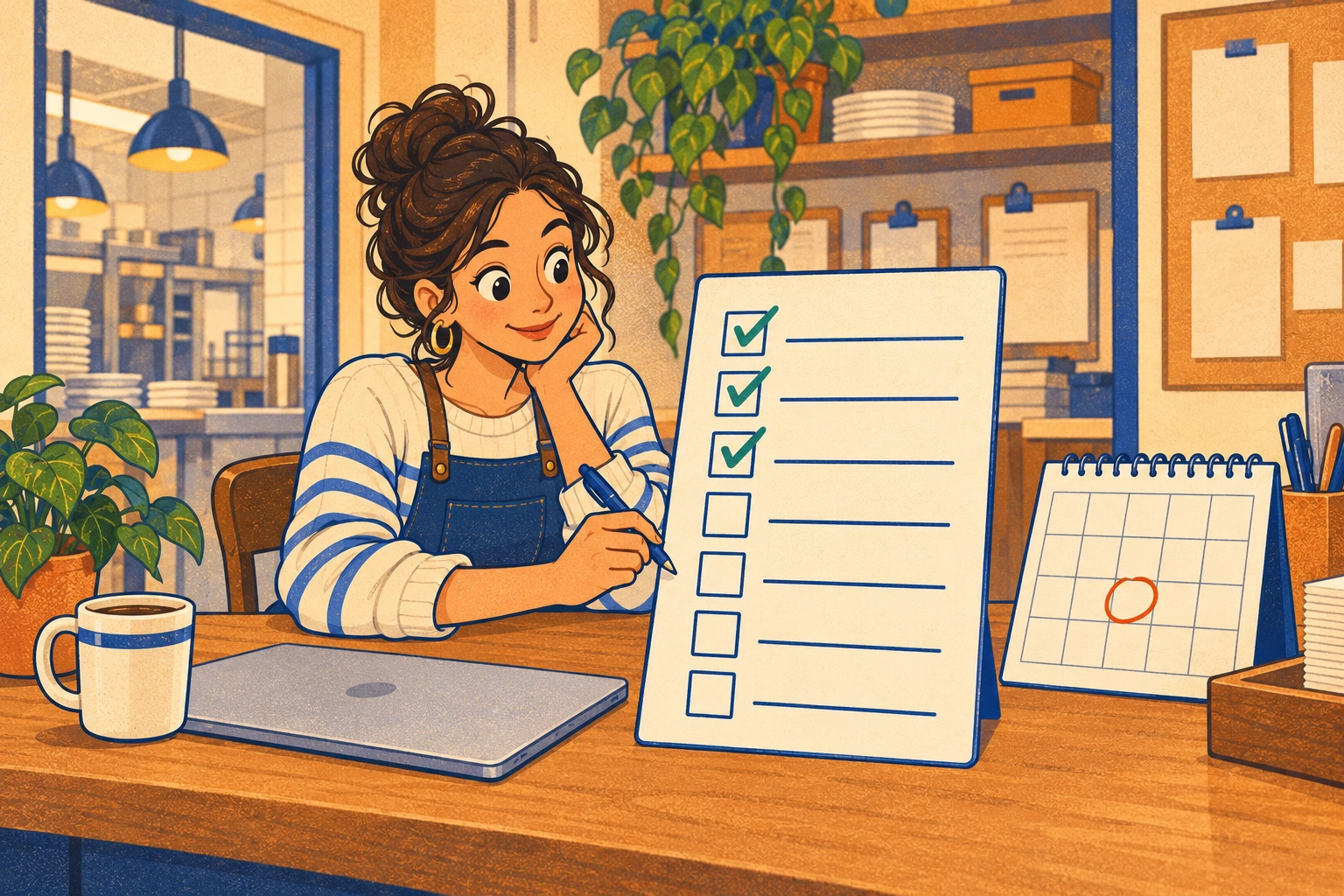
Because effort is finite, the work that pays is a short, regular check of the few profiles you own, not a yearly clean-up of everything. This is our checklist. Run it once a month per venue, with that venue's two or three owned profiles open side by side:
- Name and address (2 minutes): they match the sign, the website and each other.
- Hours (3 minutes): regular hours are right, and holiday or special hours for the next 30 days are set.
- Category and cuisine (1 minute): the main category says what you are, not what you were.
- Photos (5 minutes): the first photo shows the current room or menu; remove anything that no longer exists.
- Booking link (3 minutes): it opens this venue's booking page, not the group page or a sister site.
- Replies (5 minutes): every review from the past month has a reply from a named person.
- Log (1 minute): note what changed and who checked it.
Our free restaurant listing mismatch checker compares conflicting details across your public listings, which speeds up steps 1 to 3. For the Google side across many venues, our guide to Google Business Profile governance for restaurant groups covers permissions and locked fields.
Here is the arithmetic, with our assumptions. Take a six-venue group. Claiming everything means about eight platforms per venue, or 48 profiles; at 10 minutes each, that is 8 hours a month, mostly on profiles that feed nothing in your market. Our rule means three platforms per venue, or 18 profiles, checked in 6 × 20 = 120 minutes a month. That is a quarter of the time, spent where the answers come from.
Who does the check is the question that stalls most groups, so name one owner per platform rather than one per venue. That way the Yelp owner sees the same mistake repeated across six sites. If you want an outside view first, our free audit records the answers assistants give to the questions your guests ask, lists the pages and outside sources shown alongside them venue by venue, and ends with a 30-day plan. Tracking those answers is only the foundation. If you want the work done, our restaurant service does it: Google Business Profile optimisation, Google Search Console and GA4 setup, a blog built for you and menus rebuilt as pages AI search can read, all at no extra charge and with a person checking the quality of every change.
When is a platform not worth the effort?
The counter-case is real: a platform with no reach in your market, or a venue with no reviews and little demand on it, is a cost with no return. Claiming it adds one more profile that someone has to keep correct.
Drop or downgrade a platform when:
- It does not operate where you trade. A German venue gains nothing from Resy, whose ChatGPT bookings cover US restaurants only.
- It has closed. Quandoo is the current example in the UK and Germany.
- A venue has no reviews there and guests do not book through it. Claim it once so the facts are right, then check it a few times a year.
Chasing reviews is where effort turns into risk. Yelp's content guidelines say businesses should never ask customers to write reviews. Google bans offering incentives for reviews and selectively soliciting positive reviews. In the UK, the Digital Markets, Competition and Consumers Act 2024 bans fake reviews and reviews that hide an incentive, and since April 2025 the competition regulator can fine businesses directly, up to 10% of global turnover. In the US, the FTC's rule on consumer reviews, in force since 21 October 2024, bans incentives tied to a particular sentiment, and the FTC says asking only happy guests could still break the FTC Act. In Germany, the unfair competition act (UWG) bans fake consumer reviews. Our guide to getting more Google reviews across multiple restaurant locations sets out what you can ask for, and how.
What should you do this week?
Run the 20-minute check on your two busiest venues this week, and write one owner's name next to each platform you keep. That is 40 minutes, and it fixes the photo and the rating that the couple at your front desk saw first.
If you want to see which profiles and sources sit behind the answers for those two venues, and what we would fix first, bring them to our free AI search audit.
Sources
All pages were checked on 1 November 2026.
- Pew Research Center: share of US adults who use ChatGPT, 11 June 2026.
- DoorDash: 2026 Restaurant Industry Trends Report, 18 May 2026.
- Reputation and Nielsen: US diners and AI tools, 21 October 2025.
- Yelp Inc. annual report on Form 10-K for 2025, 27 February 2026.
- Axios: Yelp partners with ChatGPT to surface reviews, 23 July 2026.
- OpenAI: ChatGPT release notes, restaurant reservations, 10 August 2026.
- Resy: Resy launches reservations in ChatGPT, 10 August 2026.
- Search Engine Land: Yelp brings reservations and waitlists to ChatGPT, 10 August 2026.
- Google Business Profile Help: improve your local ranking.
- Bitkom: study report on artificial intelligence in Germany, February 2026.
- Tageskarte: ChatGPT shows OpenTable reservations worldwide, 13 August 2026.
- Quandoo UK service notice and Quandoo Germany service notice.
- Tageskarte: Quandoo to close by the end of 2026, 1 April 2026.
- Yelp content guidelines.
- Google Maps user-contributed content policy: prohibited and restricted content.
- FTC: consumer reviews and testimonials rule, questions and answers.
- Digital Markets, Competition and Consumers Act 2024, Schedule 20.
- German Act against Unfair Competition (UWG), Annex.
- GOV.UK: CMA consumer protection regime comes into force, 7 April 2025.


 Squarespace

 Webflow
 Sanity
 Shopify
 HubSpot