



TLDR: You can't claim your business in ChatGPT yet. A screenshot published on 6 November 2026 shows an unreleased "Claim your business in ChatGPT" page, and OpenAI has not announced it, priced it or dated it. As reported, it would give verified businesses daily impressions and clicks, control of their products and details, and a business agent. The numbers are the headline, but the claim is the bigger change: GEO stops being only work that earns mentions and also becomes work that runs a managed profile. Use the time before launch to name an owner, fix your facts and start a baseline.
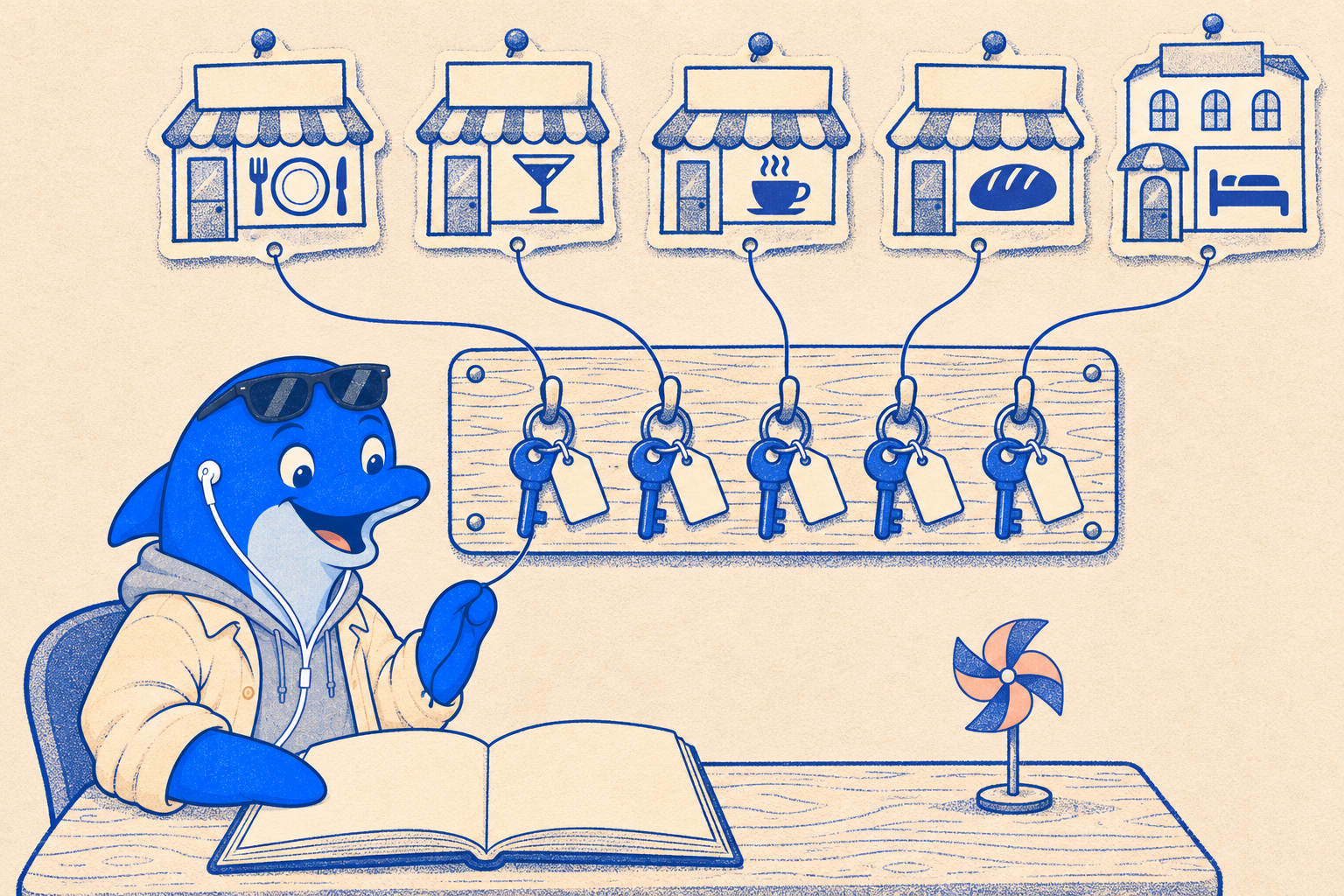
Every GEO programme has rested on one awkward fact: ChatGPT had no front desk. You could earn your way into an answer through your pages, reviews and press, but you could not walk in and say who you were. That appears to be ending.
So the useful question is not whether the dashboard is good. It is who in your business will hold the keys when the desk opens, and what they will hand over.
What is "Claim your business in ChatGPT"?
It appears to be an unreleased OpenAI feature that lets a verified business manage how it appears in ChatGPT. The screen carries a red "unreleased/beta" label and offers three things: track how often your business is mentioned, keep products and business details up to date, and let a business agent answer questions "with context you control". The fine print says you will need to verify that you are authorised to represent the business.
Two trails of evidence point the same way:
- App strings, reported 21 October. Tipster Abhishek Yadav found "Claim {name} on ChatGPT" in a desktop build, alongside business categories, product feeds, photos, logos and a message that a profile is managed by another account, The Tech Outlook reported. Shopify sign-in and Persona identity checks appeared as possible verification routes. The outlet itself warned these details come from strings.
- The dashboard, reported 6 November. Juozas Kaziukėnas of Marketplace Pulse posted that the tool measures impressions and clicks, tracked daily and shown as a chart, inside a larger Business Hub open only to verified businesses. He said he first saw early steps in August.
What the tool leaves out matters as much. The same post says it shows no prompts, no user data and no competitive benchmark or ranking, so it won't explain why the numbers move. Search Engine Roundtable reports that it seems separate from ChatGPT ads.
All of this rests on one analyst's post, one tipster's strings and a screenshot. PPC Land lists what remains unknown, including how an appearance is defined, whether it has exports or an API, its price, and its markets. It also points out that ChatGPT Business is already the name of OpenAI's workplace plan, so expect some confusion. Everything below that concerns the future is our reading, not OpenAI's roadmap.
How does this differ from Google's approach?
Google measures your pages, while OpenAI appears to be building a home for your business. The difference shows in the unit each one counts.
Search Console's generative AI reports launched on 3 June 2026 and reached all websites on 31 August. They cover AI Overviews and AI Mode in Search, plus generative AI features in Discover, and count how many times links to your site were shown. You can split that by page, country, device and date.
Gemini is where people get confused. Google's help pages list AI Overviews and AI Mode, and neither the report nor the opt-out control lists the Gemini app. So Search Console shows you Google's AI answers in Search, not what people ask the Gemini app.
Here is how the three first-party views compare today.
| ChatGPT Business Hub | Google Search Console | Bing Webmaster Tools | |
|---|---|---|---|
| Status on 7 November 2026 | Unreleased, unconfirmed by OpenAI | Live for all websites | Public preview |
| Surfaces | ChatGPT | AI Overviews, AI Mode, Discover. Not the Gemini app | Copilot, Bing AI summaries, unnamed partners |
| What it counts | Business appearances in responses | Links shown | Citations of your pages |
| Clicks | Yes, reported | Not in the AI report | Not listed |
| Query data | No prompts | No queries in the AI report | A sample of grounding queries |
| Competitor view | None reported | None | Opportunity queries, in beta |
| Identity needed | Business verification | Verified site | Verified site |
| Edit your own facts | Yes, reported | No, that sits in Business Profile | No, that sits in Bing Places |
| Agent | Yes, reported | No, Business Agent sits in Merchant Center | No |
Clicks would be OpenAI's real lead over Google's dedicated report. Glenn Gabe's 2025 wishlist for an AI search console asked for twelve things, and PPC Land counts three of them in this tool. Prompts, the thing marketers want most, are missing. Microsoft's AI Performance report comes closest with grounding queries, and its Topics Portfolio beta now flags queries where other sites appear and yours does not.

Google has the pieces too, but keeps them apart. Reporting sits in Search Console. Local facts sit in Business Profile. And Google already has its own Business Agent, a branded chat in Search that went live in January with retailers including Lowe's and Reebok. It is switched on through Merchant Center, and Google's eligibility list asks for a US e-commerce store, a verified Merchant Center account, at least 50 approved free listings and a claimed brand profile.
If OpenAI ships one hub, a business gets its identity, numbers, catalogue and agent behind a single login. That is simpler to buy and riskier to lose. Google also gives you a clear exit through its Search generative AI setting. OpenAI's reported hub has no equivalent yet, so its control remains the OAI-SearchBot rule in robots.txt, and sites that block that bot will not be shown in ChatGPT search answers.
Why does the claim matter more than the dashboard?
Because a dashboard reports on an answer, while claiming your business in ChatGPT gives you a say in it. Three things change at once.
First, your business becomes an identity OpenAI can check rather than something it infers from the web. Second, you get a direct way to supply facts. OpenAI's merchant page already says it is building a self-serve platform for data integration, and that Shopify and Etsy catalogues are integrated without an application. Third, a business agent gives you a voice inside the conversation, answering from context you choose.
The limits matter just as much. Nothing published says a claimed profile ranks better or gets recommended more often. Reviews, press and your own pages remain what you are judged on, as far as anyone can show. And ownership will bring its own trouble: that string about a profile being managed by another account suggests disputes are expected.
Ads sit close by. OpenAI opened a beta self-serve Ads Manager to US advertisers in May, and is testing Sponsored Agents, where people start a labelled conversation with a business after clicking an ad. PPC Land notes that no link between that paid format and the Business Hub agent has been established. We would still plan for one: a verified business with a live agent is a short step from an advertiser.
What does this mean for Peec AI, Profound and the AI visibility tools?
It takes away one easy number and leaves the harder, more valuable ones. A first-party chart tells you how much. It doesn't tell you which prompt, against whom, or why. We sell done-for-you AI-search work rather than a tracker, so read our view of these tools with that in mind, and use our comparison of AI search visibility tools for the full field.
| Tool | Where its data comes from | What the Hub would overlap | What stays its job |
|---|---|---|---|
 Peec AI | Daily tracked prompts. Starter: $95 a month, 50 prompts, three models | The ChatGPT mention trend | Competitor share, prompt detail, other engines, suggested actions |
 Profound | Licensed panels, structured prompts, server logs. Custom Enterprise pricing | ChatGPT click attribution | Prompt demand, crawler behaviour, up to nine engines |
 Semrush AI Visibility Toolkit | Captured prompts and responses. $99 a month | The ChatGPT brand trend | SEO and AI in one reporting suite |
 Ahrefs Brand Radar | Prompts from its keyword data, plus custom prompts | The ChatGPT brand trend | Category research across its indexes |
 Otterly.AI | Your prompts. $29 a month, 15 prompts, four engines | Much of the basic question | A low-cost multi-engine check |
 Evertune | Prompt sampling and a large panel. From $60 a month | The ChatGPT brand trend | Repeated sampling across models |
 Scrunch | Custom prompts and site work. $250 a month, billed annually | The ChatGPT brand trend | AI-agent access work on your site |
The most exposed product is the cheap, ChatGPT-focused mention checker, if the Hub turns out to be free. A small business that only wants to know whether ChatGPT names it may stop paying for that answer.
The specialists have a better case than the first reaction suggests. Sampled prompts are an estimate, and a first-party count gives them something to calibrate against. If your tracker shows you in 40% of answers while your impressions fall by half, you have a reason to ask whether it has missed a change in real demand. Google's console never removed the need for rank trackers, because it only ever showed your own site. The same logic holds here, with the added point that buyers ask more than one engine.
The harder pressure is on the work itself. Investors priced this category before ChatGPT had a first-party number: Profound raised $180M at a $1.8B valuation in September, and TechCrunch reported Peec at about $10M in annualised revenue in May. Both already sell beyond dashboards, with Peec's Actions and Profound's Agents. If the numbers become a commodity, value moves to whoever acts on them. As of 7 November, neither company's blog had published a response.
How does this change AEO and GEO work?
It adds new layers of operations on top of the work that already exists, and for providers like Schmitdy it opens a new stream of AEO and GEO work. AEO and GEO have meant making your business easy for AI answers to find, understand and trust. Two layers stay exactly as they were: your own crawlable pages, and the outside proof that engines lean on. A claimed profile replaces neither, because a business can only speak for itself and engines still look for others to confirm it.
The new layers look more like account management than content. Here is the recurring work we expect once claiming opens:
- Claim and verification. Prove authority, resolve duplicates and handle a profile someone else has taken.
- The business record. Keep categories, details, photos and logos correct, and match them to your site and listings.
- Products and menus. Maintain the feed or catalogue, so a price or an out-of-stock item is never stale.
- Agent context. Write what the agent may say, what it must refuse and when it hands over to a person. Then test it with real customer questions, as you would train a new starter.
- Reconciliation. Compare first-party numbers with tracker estimates, analytics and bookings every month.
- Ad watch. Check who is buying attention around your brand.
The reconciliation job is the one most teams will underrate, and October showed why. Profound reported that between 8 and 16 October many ChatGPT links lost their tracking tag, with visits landing as Direct and some teams seeing 30% to 40% falls in reported referrals. That is one vendor's measurement, but it shows how fragile GA4 referral tracking is, and a first-party click count would give you something firm to check it against.
What does it mean for restaurant groups and multi-site businesses?
The first version seems built for shops, so operators without a store should expect to wait, and should prepare the harder governance questions now. The verification routes named so far are a Shopify connection and, in the app strings alone, Persona identity checks. PPC Land says it is unknown whether a business without a store could verify. A restaurant group has no catalogue to connect.
Yet ChatGPT already holds restaurant data from elsewhere. In August 2026, ChatGPT added restaurant booking through partners. Resy's launch covers US restaurants, while Tageskarte reports OpenTable worldwide and Yelp in the US and Canada. A claimed profile would add a second source of truth beside your booking partner, so the two will need to agree. We covered how diners are changing in whether people use ChatGPT instead of Yelp.
The multi-site problem is ownership. Google has rules for this: a Business Profile has one primary owner, and we set out what that means for groups in our multi-location governance guide. OpenAI has said nothing about owners, location groups or agency access. Does one claim cover the group, or does each venue need its own? Who holds it when a site manager leaves? Who approves what the agent says about allergens? A wrong answer there is a safety problem rather than a marketing one, so an agent should hand those questions to the venue. A group choosing an agency or consultant for ChatGPT visibility should now ask who will hold the claim, as well as who will write the content.
The money case is easy to test. Take an eight-venue group in a month where the Hub reports 300 clicks and GA4 shows 210 sessions tagged as ChatGPT. Assume, for illustration only, that 8% of clicks book, each booking is three covers and each cover spends £45. The Hub's clicks imply 24 bookings, or £3,240. GA4's sessions imply 16.8 bookings, or £2,268. That is £972 a month of revenue you might otherwise credit to Direct. Clicks and sessions are never a perfect match, but the gap tells you how much of this channel your analytics can't see.
Where will the Business Hub launch first?
OpenAI has not named a market for the Business Hub. The best guide is where its other business products went first, and that points to the US, with no reported date for the UK or Germany. OpenAI's merchant page says shopping is live for US users and that it plans to expand to more merchants and regions over time. Until OpenAI publishes a help page for the Hub, treat every market as unconfirmed.
What do we know about the UK?
As of 7 November 2026, nothing has been reported about a UK launch of the Business Hub. ChatGPT shopping is live for US users, and the coverage of OpenAI's European ads expansion does not name the UK. OpenTable is the one ChatGPT booking partner reported for UK restaurants, because Resy's launch covers the US and Yelp covers the US and Canada. OpenAI's standard product feed also targets the US, and nothing yet shows a self-serve feed route for UK sellers. So a UK business should prepare its facts and baseline now, and treat any claim that the Hub is open in the UK as unproven.
What do we know about the US?
The US is the likely first market for the Business Hub, on our reading. Shopping, the standard product feed, Ads Manager and Sponsored Agents all started there or remain there. Google's Business Agent is US-first too. A US seller on Shopify or Etsy, whose catalogue is already integrated, looks like the likeliest early candidate.
What do we know about Germany?
No German launch of the Business Hub has been reported, and nothing above is German evidence unless stated. ChatGPT ads are expanding to 31 European countries, including Germany, and Tageskarte calls OpenTable the most relevant booking link for German restaurants. No report says whether a German business could verify, so German operators should prepare their facts and baseline now.
What should you do before it launches?
Most of this work pays off whatever OpenAI ships, so start now.
- Name the owner. Choose one person and a company email address that outlives them. Decide this before anyone in the business rushes to claim.
- Map your legal entities, brands and sites. Write down which company owns which name, and whether you would claim as a group or per location.
- Check crawler access. Confirm OAI-SearchBot, the crawler OpenAI says surfaces sites in ChatGPT search, can reach your site. OpenAI says sites that opt out of that bot will not be shown in ChatGPT search answers, and a robots.txt change can take about 24 hours to apply. Our free AI crawler access checker reads your robots.txt rules.
- Clean the public record. Make names, addresses, hours, menus, prices and booking links match across your site, Google and booking partners.
- Get your catalogue ready. If you sell products, check your Shopify or Etsy data, or test against OpenAI's feed rules, which require nine fields per product and currently target the US.
- Draft the agent brief. List approved facts, questions it must refuse, and when it hands over to a person.
- Start a baseline. Record tracked prompts, GA4 sessions and crawler logs now, so the first Hub chart has something to be compared with. Our measurement methodology sets out how we define these numbers.
Who should run the profile once it exists?
If you run one site, or one Shopify store with a small catalogue, run it yourself. You may not need us or a paid tracker at all. A team with an in-house lead and a tool such as Peec or Profound can also absorb this, provided someone owns the new work.
It gets harder with many sites, several engines and an agent that needs testing. Multi-site, multi-engine work is what we already do at Schmitdy. Testing a Business Hub agent will be new for everyone, because no such agent is public yet. Managed AI Search tracks your buyers' questions daily across the main AI engines, then improves pages, publishes articles and runs outreach, so a first-party number lands in a programme that can act on it. Company Brain connects your product, customer and marketing knowledge in one place, which is close to what "context you control" will demand of a business agent. AI Ads Monitoring already shows who appears around your brand in ChatGPT's sponsored placements. And Restaurant AI Search turns PDF menus into readable pages, which gives a future profile a clean record to draw on.
When claiming opens, we plan to take on verification, profile upkeep, agent testing and monthly reconciliation for the businesses we work with, with ownership staying in your name.
Sources
We checked these on 7 November 2026. OpenAI has published no page on this feature, so the evidence for the feature itself rests on the first four sources below. The next ten are official Google, Microsoft and OpenAI pages, and the rest are ads, restaurant, measurement and market reporting. In short, the screen, the reported impressions and clicks, and OpenAI's lack of comment are on record. Price, markets, agency access and any effect on recommendations are unknown.
- Search Engine Roundtable: OpenAI working on ChatGPT tools for business (6 November 2026).
- Juozas Kaziukėnas on LinkedIn: ChatGPT is building an analytics tool (November 2026).
- PPC Land: ChatGPT builds mention and click charts for verified businesses (6 November 2026).
- The Tech Outlook: OpenAI reportedly working on business pages inside ChatGPT (21 October 2026).
- Google Search Central: Search generative AI performance reports (3 June 2026).
- Google Search Console Help: generative AI performance report.
- Google Search Console Help: Search generative AI control.
- Microsoft Bing Webmaster Blog: AI Performance public preview (10 February 2026).
- Microsoft Bing Webmaster Blog: Topics Portfolio beta (13 October 2026).
- Google: new tech and tools for retailers (11 January 2026).
- Google Help: get started with Business Agent.
- OpenAI: ChatGPT merchants.
- OpenAI: product feed specification.
- OpenAI: crawlers and user agents.
- Search Engine Roundtable on Ads Manager (6 May 2026), Sponsored Agents (16 September 2026) and ChatGPT ads in Europe (19 August 2026).
- Resy: Resy launches reservations in ChatGPT (10 August 2026).
- Tageskarte: ChatGPT shows OpenTable reservations worldwide (13 August 2026), in German.
- Profound: ChatGPT's missing UTM tags (14 October 2026).
- Glenn Gabe: The case for an AI search console (9 July 2025).
- TechCrunch: Peec more than doubled annualised revenue, sources say (23 May 2026).
- Aaron's Newsletter: ChatGPT is building its own search console, and it's really about ads (6 November 2026).


 Squarespace

 Webflow
 Sanity
 Shopify
 HubSpot